
Introduction
The air fryer category has evolved significantly over the past few years, transforming from a niche kitchen gadget into a mainstream cooking appliance found in many homes. What started as a single-function device has now branched into more sophisticated models that can handle multiple cooking tasks. The Cosori TurboBlaze represents one approach to this evolution—a larger-capacity unit designed to serve as a multipurpose kitchen tool rather than just an air fryer.
This article explores what this particular model offers, how its features work together, and whether it might fit into different cooking lifestyles. We’ll look at its capabilities, practical applications, and the considerations that come with choosing an appliance of this size and type. Rather than making claims about whether it’s “best” or “top-rated,” we’ll focus on understanding what it actually does and what that means for daily cooking.
What Makes This Air Fryer Different: Core Specifications
Before diving into functionality, it helps to understand the physical and technical specifications that define how this unit operates. The Cosori TurboBlaze measures 6 quarts in capacity, which places it in the larger category of air fryer units. To put this in perspective, many compact air fryers are 3 to 4 quarts, making this model roughly 50% larger in volume. This size difference matters considerably when considering how much food you can prepare in a single batch.
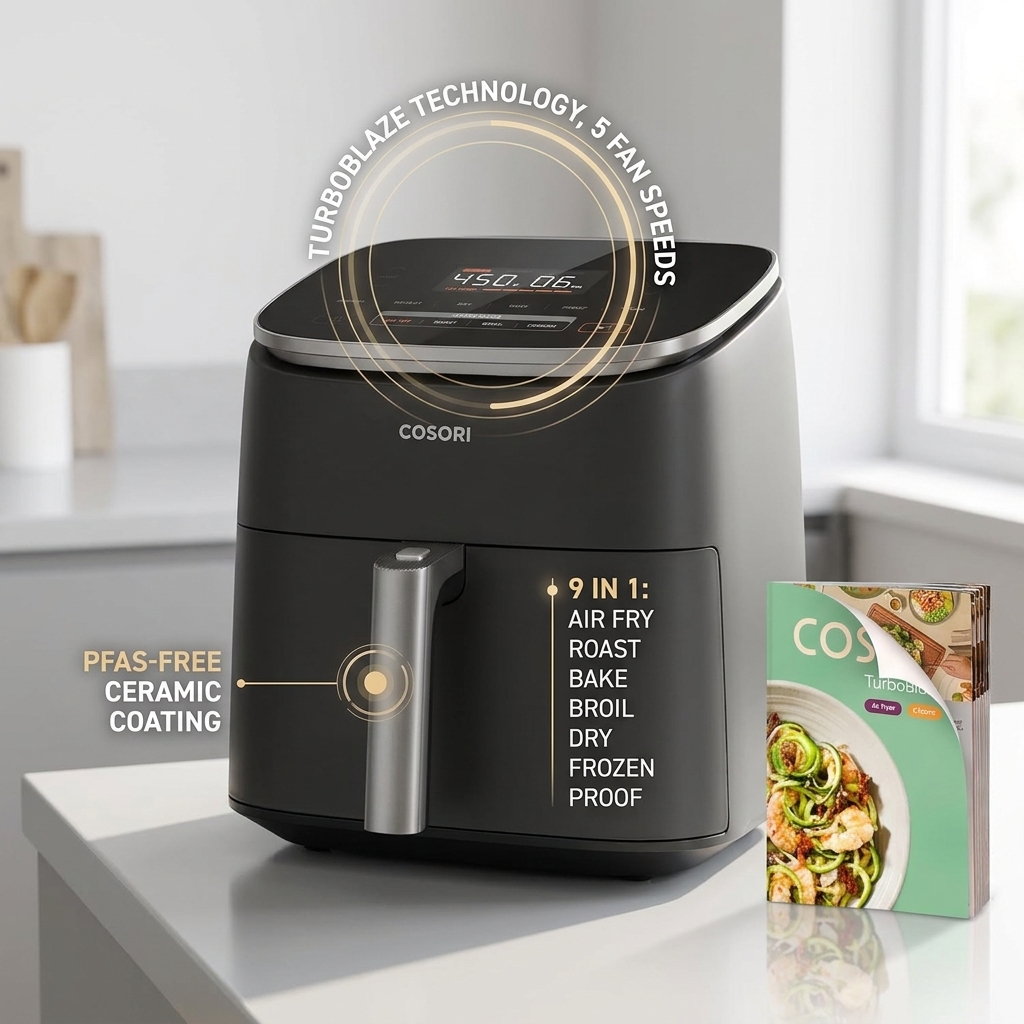
The heating range spans from 90°F to 450°F, which is notably wider than many standard air fryers that typically max out around 400°F. The lower end of the range enables functions like gentle drying or proving, while the higher temperature ceiling accommodates quick searing and high-heat cooking tasks. The ability to adjust temperatures in smaller increments across such a broad range gives users flexibility in how they approach different recipes.
The ceramic coating used on the cooking surfaces deserves particular attention. Traditional non-stick coatings have historically used perfluorinated compounds (PFOA and other PFAS chemicals) to achieve their non-stick properties. These compounds have drawn scrutiny from both regulatory bodies and health-conscious consumers. A PFAS-free ceramic coating represents an alternative approach to creating non-stick surfaces, though it’s worth noting that different ceramic coatings have varying durability characteristics and performance properties.
The five-level fan speed adjustment is another feature that distinguishes this model. Rather than running at a single fixed speed, users can modulate how aggressively the heating element and fan system operate. This flexibility allows for different cooking approaches—gentler air circulation for delicate items, more vigorous circulation for crisping applications.
Understanding the Nine Cooking Functions
The marketing refers to this as a “9-in-1” device, but understanding what each function actually does helps clarify what the unit can realistically accomplish. Let’s break down the primary cooking modes:
Air Fry remains the flagship function of air fryer units. This circulates hot air rapidly around food, creating browning and crispness through convection heating rather than immersion in oil. The intensity can be adjusted through fan speed and temperature settings.
Roasting applies sustained, even heat without the rapid air circulation of air frying. This function suits whole vegetables, chicken, or similar items where you want even browning and cooking without aggressive crisping on the exterior.
Baking operates at lower temperatures and enables users to prepare items like cookies, biscuits, small cakes, or other baked goods. The consistent heat distribution in the chamber creates results comparable to traditional oven baking, though the smaller enclosed space may affect results for very large items.
Broiling uses intense heat from above, mimicking the broiler function on traditional ovens. This works for finishing dishes, melting toppings, or achieving surface browning on items that are already partially cooked.
Drying uses low heat and gentle air circulation to remove moisture from foods. This is useful for items like herbs, vegetable chips, or jerky preparation. The lower end of the temperature range (around 90-150°F) supports this function.
The Frozen setting essentially applies air frying principles to frozen items without requiring defrosting. Many frozen foods are engineered to cook directly from their frozen state, and this function accommodates that by adjusting temperature and time appropriately.
Proofing uses gentle, consistent warmth to create an environment where bread dough or other items that benefit from rising can develop properly. This function operates at relatively low temperatures—typically in the 80-100°F range.
The remaining two functions in the “9-in-1” designation likely include variations or combinations of the above, such as a dedicated “reheat” setting or “keep warm” function.
The Practical Question: What Can You Actually Cook?
Understanding the cooking functions is one thing; knowing what this translates to in your kitchen is another. The six-quart capacity opens up possibilities that smaller air fryers cannot accommodate:
Meal preparation becomes more efficient when you can process larger quantities simultaneously. A family dinner of chicken thighs or salmon fillets for four to six people can often cook in a single batch, rather than requiring multiple rounds.
Vegetable cooking benefits significantly from the larger chamber. Roasting Brussels sprouts, cauliflower, broccoli, or root vegetables for a family meal fits easily, with room for even browning as items don’t crowd together excessively.
Baked goods like small loaves of bread, batches of biscuits, or muffins can all be prepared, though anyone expecting to bake full-sized layer cakes will need to adjust their expectations based on the chamber dimensions.
Reheating takes on new significance with a larger capacity. Leftover pizza, fried chicken, or other items can be warmed while restoring texture that microwave reheating might compromise.
Frozen food preparation from fish fillets to frozen appetizers proceeds more quickly when you’re not restricted to small batches. Frozen fries, onion rings, or chicken nuggets cook evenly in the larger space.
Dehydration projects like making vegetable chips, fruit leather, or herb preservation benefit from the extra volume, allowing for larger batches of these items.
The variable fan speeds merit practical consideration. Lower settings prevent delicate items from being blown around excessively or from over-crisping too rapidly. Higher settings deliver the dramatic browning and texture development that air frying is known for. This flexibility means the appliance can handle a wider range of ingredients and cooking styles than a single-speed model.
Considering Size and Counter Space
The capacity advantage comes with a trade-off: physical footprint. A six-quart air fryer occupies considerably more counter space than compact alternatives. For households with limited kitchen workspace, this represents a genuine consideration. The unit needs to be positioned where steam and heat exhaust can escape freely without being trapped against a cabinet or wall.
Ventilation matters more with larger units. The increased cooking volume generates proportionally more steam and vapor. Adequate clearance on all sides, particularly above the exhaust vents, ensures the appliance functions optimally and doesn’t create uncomfortable kitchen conditions.
Storage between uses presents another practical dimension. Some kitchens have sufficient counter space to leave the unit permanently accessible. Others require storing it in a cabinet or closet, which means accepting setup time before each use.
Temperature Control and Precision
The wide temperature range (90°F to 450°F) deserves closer examination because it influences what you can realistically do with this appliance. The precise temperature control affects:
Protein cooking: Achieving proper doneness without overcooking requires accurate temperature maintenance. Chicken or fish cooked at consistent temperature throughout the cycle produces more predictable results.
Delicate foods: Lower temperatures (150-250°F) allow cooking items that would burn at higher heat. This capability distinguishes this model from units with fixed or limited temperature control.
Texture development: Different techniques require different temperatures. Crisping requires higher heat, while gentle cooking or drying needs lower temperatures. The ability to adjust means you’re not forced into one cooking style.
The ceramic coating’s non-stick properties interact with temperature as well. Some non-stick coatings perform differently across the temperature spectrum, and understanding this helps set realistic expectations.
The PFAS-Free Ceramic Coating: What It Means
The materials used in cookware have become increasingly important to consumers. PFAS chemicals (per- and polyfluoroalkyl substances) have been used for decades in non-stick coatings because they excel at repelling both water and oil. However, research has raised questions about their environmental persistence and potential health impacts.
A ceramic coating represents an alternative approach. Ceramic materials are inert and don’t break down into concerning compounds during normal cooking use. The trade-offs include potential differences in longevity compared to traditional PTFE (Teflon) coatings, and potentially different non-stick performance characteristics.
The practical implication: users uncomfortable with PFAS chemicals in their cookware have an alternative option. Whether this matters depends on individual health priorities and comfort levels. It’s worth noting that actual health impacts from using PFAS-containing cookware during normal cooking remain debated in scientific literature, but the availability of alternatives addresses consumer preference regardless.
Ceramic coatings generally require gentler care. Abrasive scrubbing or metal utensils can damage the coating more easily than with traditional non-stick surfaces. Understanding proper care helps maintain performance over time.
Who This Appliance Might Suit
Different households have different cooking needs. This model makes sense for certain situations and less so for others:
Larger families preparing multiple servings benefit substantially from the capacity. Cooking for five or more people simultaneously becomes feasible, reducing cooking time or eliminating the need for multiple batches.
People with limited oven access find an alternative heating method useful. A full-size oven may be unavailable, broken, or undesirable to use during hot months. This appliance can handle many tasks an oven would normally handle.
Those interested in cooking technique variety appreciate having multiple function options. Rather than a single-purpose device, this is more of a platform for different cooking approaches.
Health-conscious cooks exploring preparation methods that reduce oil usage while maintaining texture and flavor might value air frying capabilities. Combined with roasting, baking, and other functions, cooking methods diversify.
Meal preppers often benefit from larger capacity units. Setting aside time to prepare multiple servings for the week becomes more efficient when you’re not restricted to small batches.
Households avoiding specific cookware materials find the ceramic coating relevant. If PFAS-free cookware is a priority, this addresses that consideration.
Situations Where This Might Not Be Ideal
Conversely, certain circumstances might point toward a different appliance choice:
Very small kitchens with limited counter and storage space might struggle with the footprint, despite appreciating the functionality.
Single-person households or couples without entertaining obligations might find the six-quart capacity excessive, preferring a more compact model.
Users wanting a single, simple function (just air frying, for example) might be paying for capabilities they’ll never use.
Frequent movers dealing with regular relocations might prefer the portability of a smaller, lighter appliance.
Those on very tight budgets generally find compact air fryers at lower price points, though this may sacrifice capacity and function diversity.
Maintenance and Care Considerations
Like any kitchen appliance, this unit requires reasonable care to maintain performance. The ceramic coating needs to be cleaned carefully—gentle scrubbing with soft brushes or cloths rather than abrasive pads helps preserve the non-stick surface. Most components are washable, though you’ll want to verify which parts are dishwasher-safe and which require hand washing.
The removable cooking basket and any tray inserts can typically be removed and cleaned separately, making the process straightforward. The heating element and fan system remain fixed within the chamber and shouldn’t be submerged.
Temperature fluctuations matter for any appliance. Allowing the unit to cool completely between uses and avoiding sudden temperature changes extends component lifespan. The manual that comes with the unit provides specific guidance on care and maintenance that’s worth following carefully.
General Comparison with Alternative Appliance Categories
Understanding how this type of unit compares to other common cooking appliances provides context for decision-making:
Versus traditional wall ovens: Wall ovens provide superior space for large items and batch cooking. However, they consume more energy, heat the entire kitchen more substantially, and take longer to preheat. Air fryers like this one typically preheat faster and use less energy for single-meal preparation. Wall ovens remain superior for baking items requiring precise conditions over extended periods.
Versus compact air fryers: Compact models occupy less space and cost less initially. The trade-off involves smaller capacity, typically fewer functions, and limitation to single-person or small household serving sizes. For larger families or batch cooking, compact models become limiting.
Versus convection ovens: Countertop convection ovens and air fryers both use forced air circulation for cooking. Air fryers typically achieve higher air velocities and more intense browning. Convection ovens generally offer more usable space but consume more energy and take longer to heat.
Versus slow cookers or instant pots: These serve entirely different cooking purposes and typically can’t replicate air frying’s browning and texture development. They excel at long, slow cooking or pressure cooking—functions this unit doesn’t perform.
Versus toaster ovens: Some overlap exists here. Toaster ovens can handle certain baking and reheating tasks. However, the air frying function and the ceramic coating availability distinguish this model. Toaster ovens don’t provide air frying’s characteristic browning capabilities.
Frequently Asked Questions
How loud is this appliance during operation? Air fryers generally produce noise from the fan system and heating element. Most users find the noise level similar to a microwave or exhaust fan—noticeable but not disruptively loud. Exact noise levels depend on which fan speed setting is in use.
Can you use this for true baking projects like cakes or bread? Moderate baking projects work well—cookies, biscuits, small loaves, muffins, and similar items are feasible. Full-sized layer cakes or large bread loaves may not fit or may not cook evenly due to the chamber size and design. Testing recipes and adjusting expectations based on the unit’s actual dimensions helps avoid disappointment.
What’s the learning curve for using multiple cooking functions? Most functions operate similarly to traditional cooking methods they’re mimicking. Someone familiar with oven cooking, roasting, or air frying will find these intuitive. The manual provides guidance on temperature and time recommendations for different foods.
Does the ceramic coating eventually wear out or degrade? Like all non-stick coatings, ceramic coatings can degrade with time and use. Careful handling, proper cleaning, and avoiding abrasive scrubbing extend the coating’s lifespan significantly. Specific longevity depends on usage intensity and care practices.
Can you cook multiple items simultaneously using different functions? No. The unit operates as a single cooking chamber, so only one cooking function can run at a time. However, the 6-quart capacity means you can often cook multiple types of food together (different vegetables, proteins, etc.) in a single cooking session.
How much energy does this use compared to a conventional oven? Air fryers generally consume less energy than conventional ovens for comparable cooking tasks, though the actual difference depends on cooking time and oven efficiency. The smaller enclosed space heats more quickly and doesn’t require preheating as long.
Is preheating necessary? Most cooking functions benefit from preheating, though some tasks (like gentle drying or low-temperature functions) may work without it. Preheating typically takes a few minutes, substantially less than traditional ovens.
Can you use cooking spray or oils in the chamber? Check the manual for specific guidance, as recommendations vary. In general, minimal oil is needed for air frying (one of its advantages), though some recipes benefit from light oil coating. Cooking sprays sometimes contain additives; some users prefer brushing on oil instead.
Practical Applications and Recipe Ideas
Understanding what you might actually cook helps visualize whether this appliance fits your lifestyle:
Weeknight proteins like chicken breasts, fish fillets, or pork chops cook evenly in larger portions, feeding a family without requiring multiple batches.
Vegetable side dishes from asparagus to zucchini chips, roasted root vegetables, or Brussels sprouts roasted until caramelized.
Breakfast items including hash browns, bacon, sausage patties, or shakshuka (eggs in tomato sauce) can all be prepared.
Snacks and appetizers like homemade potato chips, kale chips, or even small pizzas or flatbreads.
Reheating applications for last night’s fried chicken, pizza, or other foods where microwave reheating compromises texture.
Small batch baking for cookies, biscuits, or muffins when you don’t want to heat a full oven.
The flexibility comes from having multiple cooking tools in one unit rather than being restricted to a single function.
Understanding Performance Variables
Several factors influence how well any air fryer performs, regardless of brand:
Food arrangement affects cooking evenness. Crowding the basket too densely prevents proper air circulation. Leaving appropriate space between items produces more consistent results.
Moisture content in food influences browning and cooking time. Drier surfaces brown more readily. Patting proteins or vegetables dry before cooking often improves results.
Starting temperature matters for food safety and cooking time. Room-temperature ingredients behave differently than cold ones. Some recipes specifically account for this.
Filling level impacts air circulation patterns. Filling the basket appropriately (usually about three-quarters full) generally produces better results than overfilling.
Recipe scaling from traditional cooking to air fryer cooking requires adjustment. Temperature and time often need tweaking based on the specific equipment and food quantities.
Making the Decision
Choosing whether any particular appliance fits your household depends on several factors working together:
The capacity (6 quarts) matters if you regularly cook for more than two people or prepare larger batches. If it’s excessive for your needs, a smaller unit might serve better.
The function variety appeals to those wanting cooking flexibility beyond simple air frying. If you only want to air fry, you’re paying for capabilities you won’t use.
The PFAS-free ceramic coating addresses a specific concern for certain consumers. If cookware materials aren’t a priority for you, this feature matters less.
The temperature range (90-450°F) enables a wider variety of cooking approaches than units with more limited ranges. This matters if versatility is important.
Counter space availability affects whether the physical footprint works for your kitchen. Measuring and considering where the appliance would sit helps make this decision concrete.
Conclusion
The Cosori TurboBlaze Air Fryer represents an approach to kitchen appliances that emphasizes capacity and versatility rather than specializing in a single function. For households where larger cooking quantities, multiple cooking methods, and an alternative to heating a full-size oven appeal, the design has clear advantages. The 6-quart capacity, nine cooking functions, ceramic coating, and temperature range work together to create a multipurpose appliance rather than a single-purpose gadget.
Whether this specific model makes sense depends on your household size, cooking style, kitchen space, and priorities regarding materials and functions. There’s no universally “right” choice—only the choice that best aligns with how you actually cook.