Introduction
The modern kitchen has undergone a quiet revolution over the past few years. What was once considered a niche gadget has become a staple in many households—the air fryer. For people looking to explore this cooking method or upgrade their existing setup, understanding what different models offer is essential before making a decision.
Air fryers have fundamentally changed how many people approach everyday cooking. They promise faster preparation times, less oil usage, and consistent results for a variety of foods. However, not every model suits every kitchen situation. Some people live in apartments with limited counter space. Others cook primarily for one or two people and don’t need massive capacity. Still others simply want to try air frying without a major investment.
This is where compact air fryer models enter the conversation. They offer a middle ground—functional cooking capacity without occupying half your countertop. The Chefman 4 QT air fryer represents one option in this category, bringing together practical capacity with modern features. This article explores what this particular model offers, how you might use it, and what factors matter when considering a compact air fryer for your kitchen.
Understanding Air Fryer Technology and Capacity
Before diving into specifics about any particular model, it helps to understand the landscape of air fryers generally. These appliances use rapid air circulation technology to cook food with minimal oil, creating a crispy exterior while maintaining moisture inside. The results differ from traditional deep frying, but most people find them satisfactory for everyday cooking.
Capacity matters more than you might initially think. A 4 QT basket sits squarely in the middle range. It’s larger than the smallest personal-sized models (typically 2-2.5 QT) but considerably more compact than commercial-style units that hold 8 QT or more. This size range works well for household cooking when you’re feeding 2-4 people, or when you want flexibility to meal prep without requiring too much counter real estate.
The notion of “capacity” can be slightly misleading because air fryer volume doesn’t translate directly to serving sizes. The actual cooking space is often less than the total basket volume, and you can’t fill it completely—air circulation requires space around the food. Understanding this reality helps set realistic expectations about what you can cook in a single batch.
Key Features Explained
The 4 QT Basket Design
The basket itself is the core of the unit. At 4 QT, it provides reasonable cooking space for most household needs. The basket’s nonstick coating means less sticking of food, which translates to easier cleanup and better food release. Nonstick surfaces typically perform better with certain care practices—using soft utensils, hand washing, and avoiding high-heat oils helps prolong their lifespan.
The fact that this basket is dishwasher safe represents a practical convenience. This matters more than it might seem when you’re considering whether to use the appliance regularly. Cleanup barriers often determine how frequently people actually use kitchen tools. A dishwasher-safe component removes one friction point from the equation.
Hi-Fry Technology
“Hi-Fry Technology” is terminology used by the manufacturer to describe their approach to rapid air circulation. Different air fryer makers use various terms for essentially similar concepts—rapid hot air circulation at high temperatures. This technology is the core of how air fryers function. The rapid circulation creates the desired crispy exterior on foods while the surrounding heat cooks the interior.
The practical implication is that food cooked this way should emerge with the texture and appearance you’re aiming for—crispy exteriors without the heaviness associated with traditional deep frying. Your actual results will depend on numerous factors including food selection, seasoning choices, temperature settings, and cooking duration.
Touchscreen Controls and Preset Functions
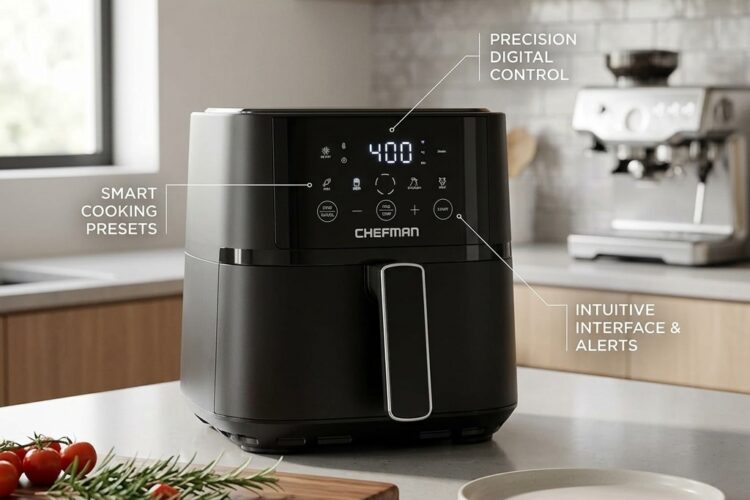
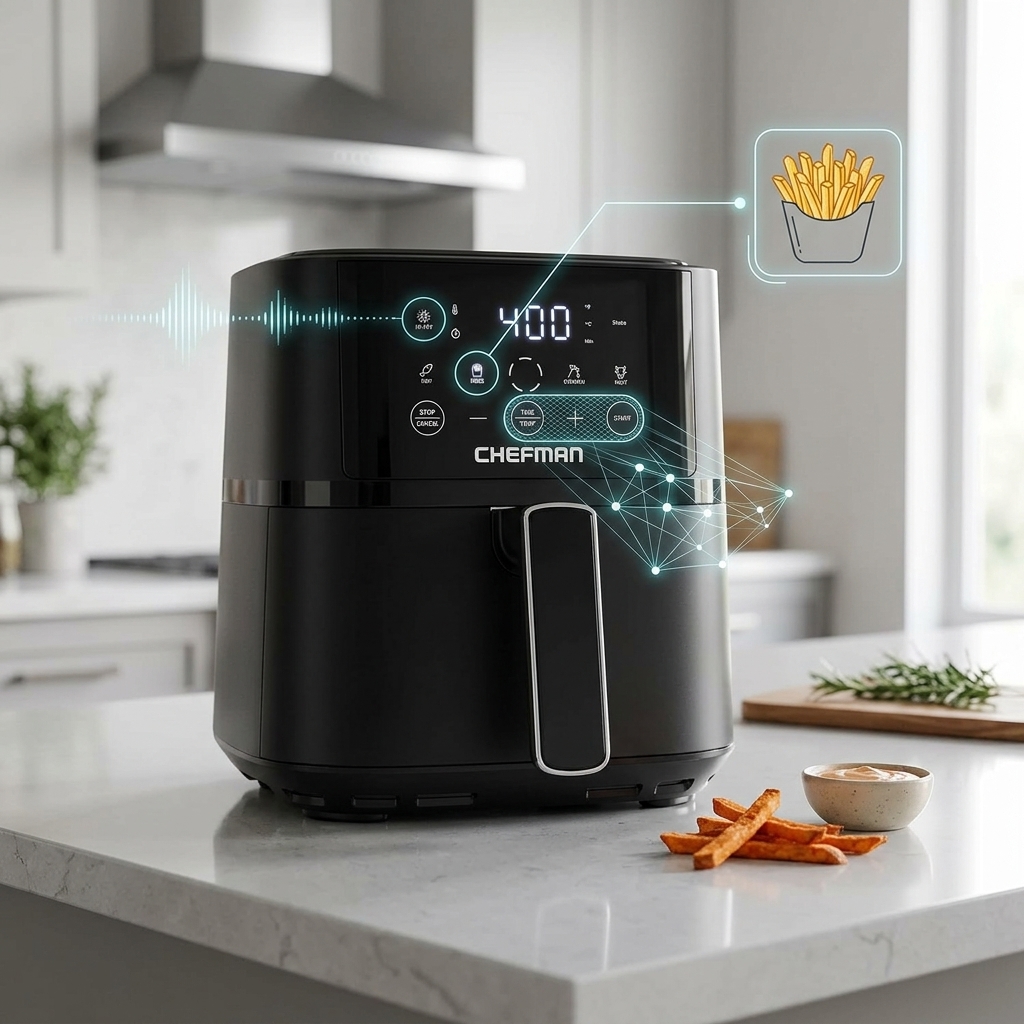
The touchscreen interface represents modern appliance design. Rather than dials or buttons, you interact with the unit through a responsive display. This interface typically includes preset programs—in this case, four of them.
Presets are designed shortcuts. Instead of calculating temperature and time for common foods, you select the preset and the machine handles the settings. Common presets include options for items like chicken, french fries, vegetables, and fish. These presets represent starting points rather than universal solutions. Actual cooking times vary based on food thickness, moisture content, and your specific preferences.
Having a touchscreen does mean the unit relies on electronics for operation. This creates both advantages and potential considerations. Modern touchscreens tend to be reliable, but they represent a more complex interface than simpler mechanical controls. If you prefer minimal technology in your kitchen appliances, this is worth noting.
Practical Applications and Cooking Possibilities
Understanding what you can actually make with a compact air fryer influences whether it suits your needs. The appliance isn’t limited to french fries and chicken wings, despite common assumptions.
Protein-Based Meals
Most proteins work well in air fryers. Chicken breasts, thighs, drumsticks, and wings all cook successfully. Fish and seafood generally require careful attention to not overcook, but the faster cooking process actually helps prevent this issue. Pork chops, steak, and ground meat preparations all have a place in air fryer cooking. Results vary based on thickness and starting temperature, but the method consistently produces acceptable outcomes for everyday family meals.
Vegetables and Plant-Based Options
Beyond proteins, vegetables expand the possibilities considerably. Brussels sprouts, broccoli, zucchini, bell peppers, and asparagus all develop nice caramelization and texture. Root vegetables like potatoes, carrots, and sweet potatoes work well, though they may require longer cooking times than lighter vegetables. Vegetarian meals built around grains, legumes, and vegetables are entirely feasible.
Frozen Foods and Convenience Items
One legitimate use case is cooking frozen foods more quickly than traditional oven methods. Frozen vegetables, preformed patties, and other convenience items cook faster and often with better texture than stovetop methods. For people with busy schedules, this practical application alone justifies ownership for many households.
Baking and Desserts
This might seem surprising, but air fryers can handle certain baking applications. Simple cakes, brownies, and donuts can be prepared successfully. The compact space and rapid heat circulation require adjustments to traditional recipes, but experimentation can yield positive results. This capability adds another dimension to what the appliance can do beyond savory cooking.
Reheating and Leftovers
Beyond initial cooking, air fryers excel at reheating. Leftover pizza, fried foods, or baked items often taste better when reheated in an air fryer than using microwave or conventional oven methods. The focused heat circulation can restore crispiness that other methods struggle to achieve.
Who This Model May Be Suitable For
Different households have different needs, and matching an appliance to your specific situation matters.
Small Households and Apartments
People living in apartments or small homes appreciate compact appliances. The 4 QT size takes up less counter space than larger models while still offering reasonable capacity. For one or two people, it provides sufficient volume for most cooking scenarios. This makes it practical for urban dwellers, students, or anyone with limited kitchen space.
People Exploring Air Frying
Someone new to air frying might want to try the method before investing in a larger unit. A compact model represents lower financial commitment while allowing genuine exploration of whether the cooking method fits their lifestyle. Once you understand your usage patterns, you can make more informed decisions about future kitchen tools.
Busy Professionals
The faster cooking times appeal to people with demanding schedules. Quick weeknight meals become easier when cooking time drops from thirty minutes to fifteen. Batch cooking small portions for meal prep becomes more feasible without taking up excessive counter or storage space.
Secondary Kitchen Setups
Vacation homes, office break rooms, or dorm situations sometimes benefit from secondary cooking appliances. A compact model performs this role without overwhelming a limited space.
People Interested in Healthier Cooking Methods
Those seeking to reduce oil consumption find air frying appealing. The nonstick basket and rapid heat circulation allow cooking with minimal added fat. While this doesn’t make food inherently healthy—ingredients and portions still matter—it does align with dietary approaches emphasizing reduced oil usage.
Important Considerations Before Purchasing
Every appliance involves tradeoffs, and understanding them helps set realistic expectations.
Space and Countertop Real Estate
Even at 4 QT, this appliance occupies counter space. Before purchasing, honestly assess whether you have suitable placement. Will it live on the counter permanently or store in a cabinet? How often would you realistically use it? Space considerations sometimes determine whether an appliance actually gets utilized regularly.
Cooking Batch Sizes
While 4 QT sounds substantial, actual usable cooking space is less. You can’t pack a basket completely full—air needs to circulate around food. Realistically, you’re cooking for 2-3 people per batch, or 1-2 people with generous portions. If you frequently cook for larger groups, a bigger unit might suit you better despite taking up more space.
Learning Curve and Experimentation
Air frying is relatively straightforward, but results improve with familiarity. Temperature and time settings for any given food often require minor adjustments based on food thickness, moisture content, and desired final texture. Initial results might disappoint if expectations are set on perfect outcomes immediately. Viewing the first few uses as learning experiences rather than finished products helps build realistic expectations.
Heat and Steam Considerations
Air fryers generate heat and moisture during operation. Placing one near walls or cabinets requires ventilation consideration. Similarly, the appliance produces steam that can affect nearby surfaces. Adequate spacing from cabinetry prevents potential issues. Some kitchens handle this more easily than others depending on layout.
Noise Levels
Air fryers produce noise during operation—typically moderate but noticeable. If you have sensitive hearing or a small space where every sound carries, this is worth considering. The noise level doesn’t constitute a deal-breaker for most people, but awareness prevents surprises.
Cleaning and Maintenance
While the dishwasher-safe basket simplifies cleanup, the main unit exterior requires wiping down. Regular maintenance of any appliance extends its lifespan. Understanding the basic cleaning requirements and factoring them into your routine makes a difference in long-term satisfaction.
Oil and Food Splatters
Despite the “frying” name, air fryers use little to no oil. However, some foods produce splatters or residue inside the cooking chamber. Regular interior wiping with paper towels or soft cloths maintains optimal performance and prevents buildup that might affect heating efficiency.
How Compact Air Fryers Compare to Alternative Cooking Methods
Understanding how air fryers fit into the broader cooking landscape helps contextualize their role in your kitchen.
Versus Conventional Ovens
Standard ovens provide larger capacity and can handle multiple dishes simultaneously. However, they heat larger spaces and take longer to reach temperature. Air fryers preheat quickly and target heat precisely to one basket. For single-dish meals or smaller servings, air fryers cook faster. Conventional ovens remain superior for batch cooking or dishes requiring large, flat surfaces. Most households benefit from both—they serve different purposes rather than one replacing the other entirely.
Versus Stovetop Cooking
Stovetop methods offer direct control and work for countless cooking applications that air fryers can’t handle. Sauces, soups, and foods requiring specific liquid environments belong on the stove. Air fryers handle foods better cooked with dry heat and rapid circulation. Again, complementary tools rather than replacements.
Versus Microwave Reheating
For reheating purposes, air fryers significantly outperform microwaves in terms of texture preservation. Foods maintain crispiness and don’t develop the rubbery quality common with microwave heating. However, microwaves handle liquids and certain foods better. The choice depends on what you’re reheating.
Versus Larger Air Fryer Units
Larger air fryers offer more cooking capacity per batch. For families regularly cooking for six or more people, or for serious batch cooking and meal prepping, bigger might be more practical. However, they require substantially more counter space. Compact models make sense when space constraints exist or when your cooking needs don’t demand large batch sizes.
Versus Toaster Ovens
Toaster ovens provide cooking surface and capacity advantages, handling larger items and multiple dishes simultaneously. However, they’re typically bulkier and heat larger spaces. Air fryers cook faster and more efficiently for suitable foods. Some people use both—toaster ovens for broader applications and air fryers for quick, crispy cooking.
Frequently Asked Questions About Compact Air Fryers
What kinds of foods work best in a 4 QT air fryer?
Smaller to medium-sized foods perform best. Chicken pieces, fish fillets, vegetables, and frozen items all work well. Whole chickens or large cuts of meat may not fit or cook evenly. Items requiring longer, slower cooking also aren’t ideal. The appliance excels with foods that benefit from rapid, dry heat circulation.
How much oil should I use?
Most foods cook successfully with minimal to no added oil. The nonstick basket itself helps prevent sticking. For foods traditionally fried, a light oil spray (using an oil sprayer, not nonstick cooking spray which can damage nonstick surfaces) can enhance browning. Many recipes work perfectly without added oil, particularly when cooking foods with natural fat content.
Can you cook multiple items at once?
Yes, if they have similar cooking times and temperatures. For example, you could cook both vegetables and protein in the same batch. However, you can’t stack foods vertically or significantly reduce air circulation space. Practical batch cooking means planning meals where components work together cooking-wise.
How accurate are the preset programs?
Presets provide helpful starting points, but they’re not one-size-fits-all solutions. Food thickness, moisture content, and personal preference for doneness all affect actual results. Consider presets as guidelines requiring minor adjustments based on your specific ingredients and preferences.
Is cleanup really that simple?
The nonstick, dishwasher-safe basket simplifies things considerably. However, the main unit’s interior may develop buildup over time. Regular wiping with paper towels helps maintain cleanliness and prevents residue accumulation. It’s simpler than traditional frying cleanup but requires more attention than a simple wipe-down.
What’s the actual learning curve?
Most people achieve acceptable results within their first few uses. Temperature and timing might need tweaking, but the basic concept is straightforward. Spending time understanding your specific unit’s characteristics—hot spots, optimal settings for particular foods—takes a few weeks but happens naturally through regular use.
Does size of the unit mean lower cooking quality?
No. Cooking quality depends on heat circulation efficiency, temperature consistency, and materials, not primarily on size. Compact units cook food just as effectively as larger ones, just in smaller batches. You’re not sacrificing quality for space savings.
How long do these units typically last?
Modern air fryers, when properly maintained, last several years. The nonstick coating may degrade over time with heavy use, but basket replacement is often possible. Electronics failure is relatively uncommon but would affect the unit’s usability. Most people get years of reliable service.
Are there any foods I absolutely shouldn’t cook?
Very wet batters, foods requiring liquid environments, and whole large items that don’t fit are problematic. Items intended for liquid heat—boiling, poaching—don’t work well. Beyond these, most foods are fair game with experimentation.
Do I need any special accessories?
No special accessories are required for basic operation. However, some people find parchment liners, oil sprayers, or racks useful for specific applications. These are optional additions that might enhance your experience but aren’t necessary to start using the appliance.
Making the Decision: Is This Right for Your Kitchen?
Ultimately, whether this particular model suits your needs comes down to your specific situation. Consider your available counter space, cooking needs, household size, and cooking style. If you frequently cook for large groups or need large batch cooking capacity, a bigger model might serve you better. If space is limited and you cook for one to three people, or you’re exploring air frying for the first time, a 4 QT compact model offers legitimate advantages.
Think about how you actually cook—whether you’d realistically use quick-cooking methods, whether your lifestyle suits meal prepping in small batches, whether you have the counter space ready. Honest answers to these questions guide better decisions than generic recommendations ever could.
The compact air fryer category addresses real needs in modern kitchens. Not everyone requires massive capacity or has the space for oversized appliances. For those situations, properly specified compact models deliver practical cooking capability without overwhelming kitchen limitations.
Conclusion
The Chefman 4 QT air fryer represents a practical option in the compact air fryer category. With its 4 QT capacity, touchscreen interface, preset programs, and nonstick dishwasher-safe basket, it addresses the common needs of people seeking compact cooking appliances. The Hi-Fry technology provides the rapid air circulation that defines modern air fryer performance.
Whether this specific model aligns with your kitchen depends on your circumstances—your space constraints, cooking needs, household size, and experience with air frying. It’s not universally the right choice for everyone, but for many households, it represents a well-suited middle ground between compact and capable.